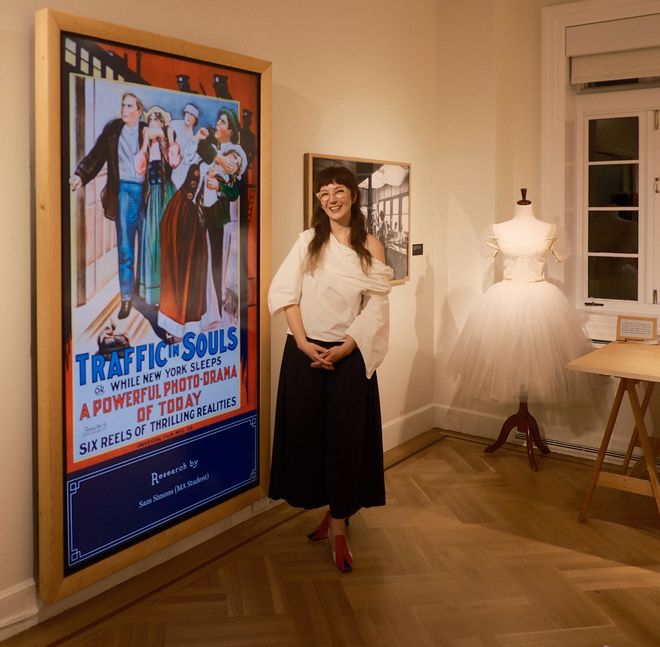
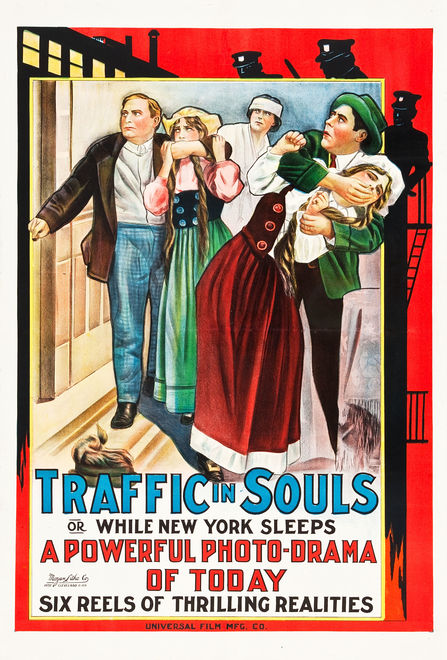
When you visit the fourth-floor Workshop in Bard Graduate Center’s exhibition Goddesses in the Machine: Fashion in American Silent Film, you’ll be invited to interact with a selection of digital film posters that bring silent cinema’s history to life. Touch the Traffic in Souls (1913) poster to explore my research on the film’s connections to the Progressive Era’s so-called “white slavery” panic, landmark federal legislation policing sex, and the emergence of the FBI. Through film clips, archival images, and historical analysis, discover how public debates about sexuality shaped American silent filmmaking and moviegoing.
Consider George Hand Wright’s 1919 illustration for Harper’s Monthly Magazine depicting young women and children examining posters outside a theater warning “DANGER WITHIN.” Its caption, “On the east side melodrama flaunts its eternal lure,” echoes anti-vice crusader Ernest Bell’s condemnation of “The Eternal Lure of the Stage,” which portrayed theaters as gateways through which young white women entered the commercial sex trade.
Wright’s illustration also shows how film advertising actively shaped city life. Outside theaters, posters competed for attention, conveying entire cinematic worlds at a glance. More than advertisements, these posters reflected the cultural debates of their time. The Workshop’s interactive versions recreate that encounter, connecting visitors with the material culture and social history of silent cinema. This project brought together teams across BGC: Public Humanities + Research, Digital Humanities/Exhibitions, the Library, and the curatorial staff. I’m thrilled to see this collection realized as Goddesses in the Machine’s “Poster Gallery,” featuring four interactive posters with research from PhD students Sydney Maresca, Joshua Massey, and Summer Anne Lee.